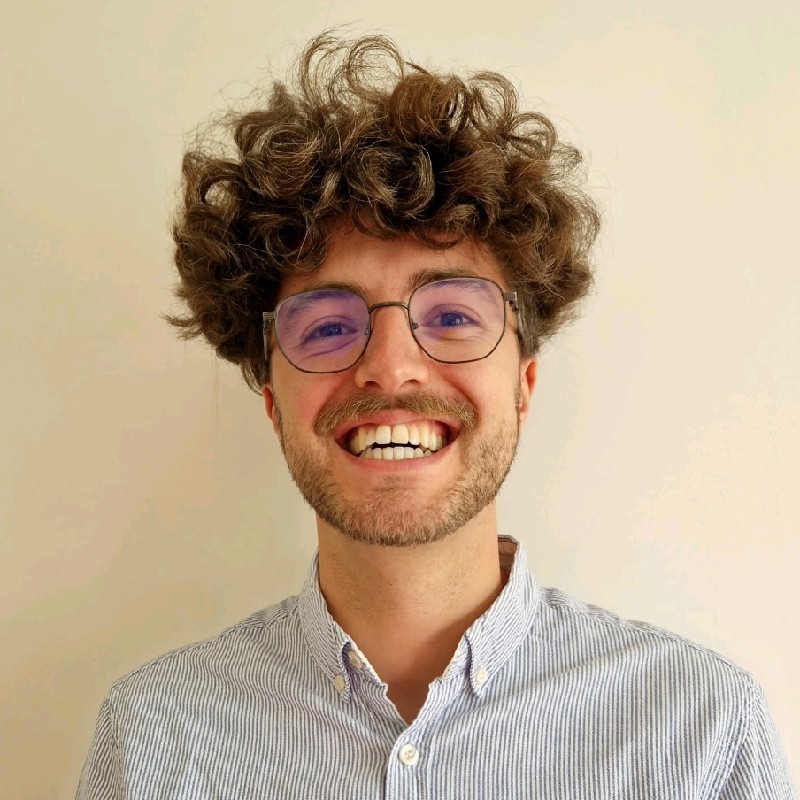
I trained as an agronomy engineer, specialised in applied statistics, and gradually moved into building software for scientific teams. R Shiny applications, internal data products, reproducible analysis workflows, and some machine learning when the problem actually calls for it. The path made sense at each step, even if it does not look obvious on paper.
For the past 5+ years I have worked embedded in R&D and clinical teams at L'Oréal, Sanofi, Abolis, and now Chanel Parfums Beauté, building things at the intersection of statistics, software engineering, and experimental science.
Currently Data Scientist & ML Engineer at Chanel Parfums Beauté R&D , on mission via Astek / IT&M Stats . I build R Shiny dashboards, reproducible pipelines, and ML tools used by scientists in fragrance and cosmetics research.
What I do
R Shiny & internal products
I design and ship internal tools for scientific teams: modular R Shiny apps, reporting workflows, and data interfaces that people can use without needing a walkthrough every time.
Architecture, quality & delivery
From early architecture decisions to documentation, validation, deployment, and ongoing support. I care about maintainability because scientific software has a way of outliving the original deadline by years.
Statistical modeling & analysis
Design of experiments, mixed models, biostatistics in GxP environments. I work across the full analytical chain, from raw assay data through to interpretation for regulatory submissions.
Reproducible engineering & MLOps
Everything in Git, runnable six months later with uv sync or renv::restore(), documented well enough to hand over. CI/CD, containers, environment pinning, and qualification-minded delivery show up in most of my projects.
ML when it is the right tool
Computer vision, NLP pipelines, LLM-assisted extraction for scientific applications. I like building ML systems, but I like shipping the right product more than fitting a model into a problem that does not need one.
Selected proof
- Engineering Standards for Scientific Software : how I think about tests, documentation, CI/CD, handover, and technical training.
- Reproducible Environments for Everyone : how I think about standards, onboarding, and maintainable delivery.
- Resources Catalog : a public curation project that reflects how I document, teach, and structure knowledge.
How I work
- End-to-end ownership. I frame the problem, choose an architecture, build it, validate it, deploy it, and keep it running.
- Quality by default. Tests, documentation, reproducibility, and honest trade-offs, not it works on my machine.
- Handover is part of the job. Mentoring, internal training, and documentation are built in, not bolted on.
- Staying close to users. Workshops, iteration, and feedback loops with scientists, analysts, and operational teams.
Skills
Programming
Applications & delivery
ML & AI
Statistics & methods
MLOps & infrastructure
Engineering & domains
Education
- Diplôme d'Ingénieur — Statistiques appliquées aux Sciences de la Vie — Institut Agro - Agrocampus Ouest, Rennes · 2021
- Master — Mathématiques Appliquées · Statistiques — INSA Rennes · Agrocampus Ouest · Université Rennes 2 · ENSAI · ENSAE (joint programme) · 2021